Showing posts with label meeting. Show all posts

Tuesday, October 16, 2012

Hemodynamic Mechanisms of Acute Kidney Injury


Last week I was at an Acta Physiologica Symposium in Copenhagen. It was a scientific meeting jointly financed by the Scandinavian Physiological Society through the European journal Acta Physiologica, previously Acta Physiologica Scandinavica, and the German Science Council. As far as I have understood the first meeting they have ever financed outside of Germany.

From my perspective it was brilliant, there were at least six of my collaborators there and we got some time to discuss our future plans. Admittedly, not much time, but face-time is worth immensely much more than any number of mails and phone calls.

We were at the very worthy Royal Danish Academy of Science located in an old building right across from Tivoli in Copenhagen, just behind the city hall. It's from a time when there was money for science, and when that money wasn't unnecessarily spent on research. Marble, marble, marble, huge oil-paintings, relief-ceilings with paintings.


The actual meeting was about the hemodynamic mechanisms of acute kidney injury, which is a very current topic indeed. We are just about closing in on a time when we will be able to detect kidney injury already in the A&E, before the advent of renal failure with cessation of filtration. This means we will need to be able to distinguish different kinds of kidney diseases and will be able to follow treatment much more closely. What it means is that not only will we have to understand the early progression of kidney injury much better, we also need to find new, quick ways of defining it. It's going to be lots of fun. Look for the proceedings in the March or April issue of Acta Physiologica.

Sunday, April 15, 2012

Conference-season 2012

For conference-season this year I have two major meetings planned. I have done my share of extra time in the A&E during Easter to be able to go without using up my vacation. First, I am bringing two students to Experimental Biology in San Diego. Then, I am going to London for the 22nd annual meeting of the European Society of Hypertension where I have to present my data myself.

This year both societies are providing iPhone apps with the program: EB2012 and iESH2012. The Experimental Biology is actually available for Android as well. The EB-App works brilliantly, while the ESH-App shows nothing what so ever at the moment. The screen-captures in the app-store looks promising, so I understand it as if the App will be some kind of live-update thingy. That does not really help me now when I try to plan ahead.

Using the brilliant round-trip planner kayak.se I even managed to book a round-trip flight so that I do not have to go back to Sweden in-between or something equally stupid.

Having spent all my time in the A&E and helping put together the posters for EB, I am hopelessly behind in constructing my own poster. If I had had a talk it would have been much simpler. Then I could have kept preparing and changing it until the last minute, or at least the day before. Now I have to have time to print it before-hand.

So, maybe I should not sit here blogging. I will, however, try to report something from the meetings once I am there.

Sunday, February 12, 2012

Hypertension course - Day 2


After a too short night's sleep we started day two at 8:45 in the morning. The morning sessions covered treatment and current guidelines. Even though I was a bit tired, I managed to remember to take some pictures (for the blog), and write an extra presentation to replace a lecturer that could not attend.

There is massive data that shows that reducing the pressure under 140/90 mmHg is the first priority. Use what ever means necessary, just get the pressure down. Then there is data to show that renin-angiotensin-system-blockers may have some additional benefit. In type 1 diabetes this is indisputable. Type 1 diabetic patients should have an ACE-inhibitor or an ARB as soon as they show microalbuminuria, no matter what their pressure is. Unless you have a specific need for a beta-blocker you should start with a RAS-inihibitor and a calcium blocker.

The afternoon focused on target organ damage and associated diseases, such as diabetes, stroke and old age. To protect the heart and kidneys, ACE-inhibitors or ARBs are the best choices. To protect against renal failure and stroke it is quite clear that lower pressure is better down to 120/70, at least. For the heart, the nadir may be around 130/80, considering that the coronary arteries are perfused in diastole, this is not surprising. After stroke, certainly ischemic and maybe hemorrhagic, the pressure should not be treated the first couple of days, with the possible exception of systolic pressures above 220mmHg.

In the elderly, pulse pressure is a much stronger predictor of mortality than systolic pressure or diastolic pressure, so that 160/110 mmHg is actually better than 160/60 mmHg. Much better.

Hypertension is therapy resistant when treated with three antihypertensives at the maximal doses, including a thiazide-diuretic. It may then be time for renal nerve ablation, or to ask the patient if they eat a lot of salt. Another under-appreciated reason for uncontrolled blood pressure is doctor's-, or even investigator's-inertia. That is, the patient has an uncontrolled blood pressure, does not have the maximal dose, have not experienced any adverse events, and still the dosage isn't increased by the doctor.

All in all, it was a very successful course. 130 attendees, and some 20 lecturers. The next one will be in two years, in 2014.

On a side-note, free wifi on the airplane home is brilliant. All airlines should provide it, on all flights.

Actually, everywhere should provide free wifi.


Monday, August 29, 2011

SPS 2011 in Bergen

The annual meeting of the Scandinavian Physiological Society was held August 12-14. The difficulty of trying to combine working as a junior doctor with active research made itself evident by my trying to fly in the same morning. Since the airlines still believed it was summer, there were no direct flights. So I had to board at 05:40 in the morning in order to arrive in Bergen at 09:30 after a brief stop in Copenhagen. Yes, Copenhagen. That is 1217 km instead of 703 km according to Google Maps.


Anyway, that meant I missed the opening lectures. As far as I have heard they were brilliant. Polly Maltzinger talked about "Conversations between tissues and the immune system" and then Roger Seymour talked about "Homage to Scholander, Johansen and Schmidt-Nielsen: Ecophysiology of temperature regulation and energetics".

The most interesting presentation that I actually attended was Jens Titze's about how macrophages in the skin affect sodium balance and blood pressure. Apparently this happens completely without involving the kidneys. If you, like I, have a hard time grasping the idea you can read more in his Nature Medicine paper: "Macrophages regulate salt-dependent volume and blood pressure by a vascular endothelial growth factor-C-dependent buffering mechanism" (Machnik et al. Nat Med. 2009 May;15(5):545-52). The future developments in this field will be very interesting.

The social program was outstanding. The young investigators party included a free bar (Yay!) and a live band. Although they played a bit too loud for relaxed conversations, the lubrication was enough to get even young, more or less autistic, researchers to socialise and meet new people. Saturday evening there was the conference dinner, which was held at the top of mount Fløyen. The resturant managed to produce very nice, quite authentic Norwegian food, and similarly very good entertainment with some authentic Norwegian parts.

All in all, a very successful meeting. Thanks to the organisers in Bergen and the SPS for making it happen.

Saturday, July 03, 2010

FASEB Summer Research Conference - Renal Hemodynamics


Jeff Garvin, introducing the second day of the meeting, if I remember correctly.

If any meeting deserves its own post it is the FASEB Summer Research Conference on Renal Hemodynamics. This year with the sub-title: Mechanisms to understand disease. It has been arranged every three years since 1989. This year, and mostly, it was at the boarding school Vermont Academy in Saxton's River, Vermont, USA.


The walk-way from the dorms to the dining-hall, going in the other direction you get to the auditorium. The dining-hall and auditorium were the only two air-conditioned spaces there, making them quite popular with the participants in the not-quite-100-degree Vermont summer.


As you gather from the name, it is a tightly scoped meeting that draws around 120 people to a half-a-week of 8.30am - 10.20pm scientific sessions. There is a generous lunch break for soccer, softball, paddling, basket ball or discussing papers and collaborations.


In the nicely hot weather, it was very refreshing to go swimming in the river, which was more of a creek than an actual river.


Another pass-time was walking around in the woods, not that I did much of that. This was taken on the way to bathing.

Organisers were Jeff Garvin and David Pollock who did a terrific job. The program was varied and interesting, providing more than usual space to younger investigators. This piqued some senior PIs that weren't invited and therefore stayed at home. Luckily, even they sent, or allowed, their more junior members to participate.

One of the very best part of this meeting is the poster sessions, which start when the bar opens in the evening. There were around 30 posters per session. About twice the size of a poster section at any larger meeting. There was ample time to visit all the posters and discuss science over beer. This was followed by more beer and ping-pong, fussball or billiards. Followed by late night story telling under the starry skies in Vermont, which may or may not have been abetted by the drinking of bourbon.

After a week of that, it is lucky that you can blame it all on the jet-lag when you get home.

Yours,

Michael

Sunday, April 25, 2010

Experimental Biology - first morning

It is conference time for physiologists. Experimental Biology is by far the largest meeting for physiologists, and this year it's in Anaheim, California, right beside Disney Land. Now it's the morning of the second day. It is 5.30am and I can't sleep.

It started yesterday with the traditional refresher course. I feel a little bad for them, because I just couldn't take four hours of sitting down, so I only stayed for the first two and a half - even though the last talk looked like lots of fun. Of course, now in the days of the internet, I can just go and listen to the recording at www.the-aps.org/education/refresher.

The first two were really good, Donna Korzick talked about how:

"The Heart Develops Pressure, And Pressure Makes the Blood 'Go Round"

Which turned out to be mostly charge excitation coupling and pacemaker activity, including some exciting new data on how local calcium releases actually drives the slow depolarisation (see Lakatta et al, Circ Res, 106: 659-673, 2010).

Then Philip Clifford talked about "Local control of blood flow." He showed some really nifty confocal images of vascular structure and then talked about autoregulation. Not proper, renal autoregulation, but the sloppy kind you find in other organs. Most interestingly he pointed out that the myogenic response is a quite slow mechanism in muscle tissue, for example. Taking somewhere around two minutes to return blood flow to normal after a perturbation. In the kidney, bloodflow quickly stabilizes (20-30 seconds) following a perturbation. Although some of this is probably because of interactions between the myogenic response and the tubuloglomerular feedback, I think I brought home that myogenic response is faster in the kidney.

The afternoon brought a guest appearance of renal circulatory physiology at the micro circulatory society. You might call it a refresher course in renal autoregulation and afferent arteriolar function provided by the usual suspects, Arendshorst, Peti-Peterdi, Inscho. There was a small detour to the medulla. Pallone presented some very interesting data on how water shunting from the descending vasa recta to the ascending helps increase the concentrating capacity.

Last of the days lectures was the Walter B. Cannon memorial award lecture. This year it was awarded to JJ. Fredberd of the Harvard School of Public Health, an engineer who works in pulmonary physiology and probably wil receive the Nobel Prize in medicine for his evolutionary findings. A fantastic lecture, where he presented more novel ideas (with supporting data) in less time than anyone I have met in recent memory. In short, cells are soft as shaving foam because it makes them capable of eating their neighbours and/or crawling around. This explains the development of the eucaryote. I will have to study this for years before I understand it, maybe I will attempt a post on the implications for renal physiology at some later time.

Finally it was time for the free food and free beer, i.e. the opening reception.

The time when the breakfast buffet opens is approaching and I have to go.

/M

Saturday, January 09, 2010

Saturday mix


Madicken going for the ball.

In Sweden it's very much a tradition that you're only allowed candy on Saturdays. There's a (or several probably) special bag of assorted sweets called Saturday mix. In honour of this staple of my childhood I'm going to post all sorts of shit here today.

Friday provided some really exciting new science. I was writing my abstract for ESH 2010 (to which you should go, deadline on Jan. 15th). When my pathologist (who I keep in a box) sent me a message on facebook and said that she had a surprise for me. Just then the abstract went from being a good abstract to being an exciting abstract. If you come to Oslo, I'll tell you (or show you on the poster).


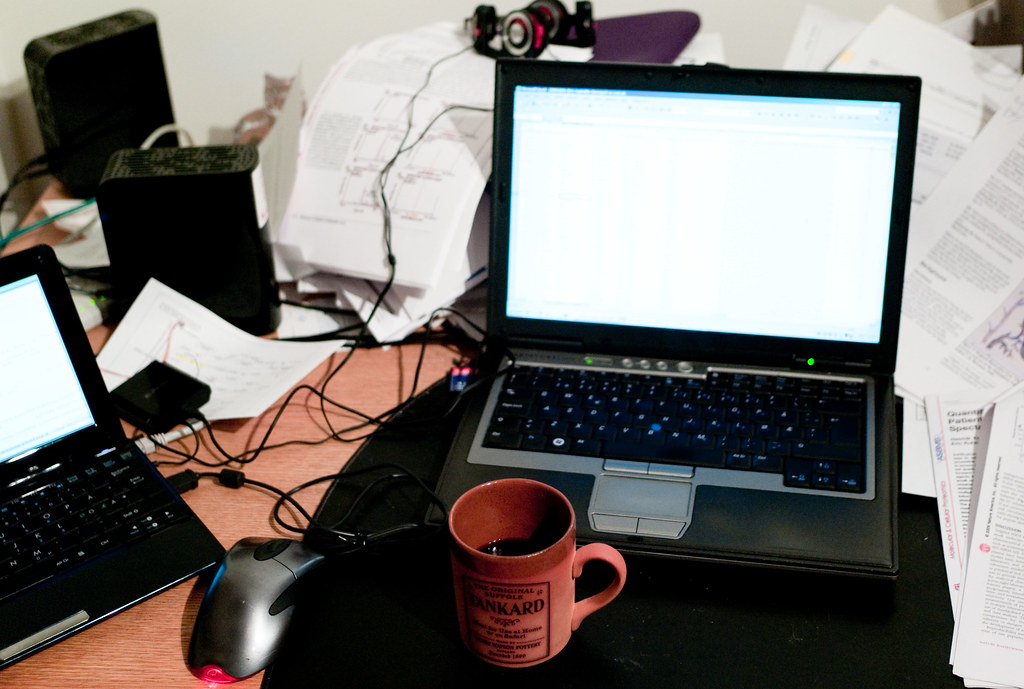
My desk at home as it looks when I am analysing data and writing abstracts all at once. It always looks like that but that just an ugly truth.

Then I had a really good chat with a post-doc from a lab where I would like to work. With some encouragement I sent an e-mail off, and lo and behold, got a swift and guardedly postitive answer from the PI.

So, today I'm in a good mood and fixed the first batch of pictures. They're not as good as I would like them, and I already missed two days, but they do make the blog prettier. I'm all for pretty blogs.


Madicken welcoming my fiancee back home.

Have a nice week end, don't eat too much candy, and remember to register for ESH2010.

Michael

Thursday, October 15, 2009

12th Symposium of vascular Neuroeffector Mechanisms

I just got a heads-up on an interesting symposium in connection with WorldPharma 2010. It is the 12th Symposium of vascular Neuroeffector Mechanisms, put together by Pernille Hansen in Odense. You can find the website at www.vnm2010.org, it will give you a perfect reason for staying another day in Denmark at the very best time of year.

Now I just have to scrape together an abstract. I'm sure I saw some data here somewhere.

Yours,

Michael

Friday, September 04, 2009

Report from SPS annual meeting in Uppsala

This was meant to be a timely post, but that is apparently not my forte. It was also meant to include some interesting science, but I thought it was time to get this out, seeing that the next meeting is just around the corner.

Now it is a week couple of weeks month since the annual meeting of the Scandinavian Physiological Society, which was held in Uppsala, Sweden this year. The meeting provided the best renal sessions I have visited so far at a SPS meeting. This obviously does honour to the Kidney Resösh Group [sic] in Uppsala.

By far the best part of the meeting was the extra curricular activities. I got to meet up with many of my old friends and colleagues in Uppsala and then we got drunk together.

So thanks to everyone. I hope to see you again next year, maybe already at Experimental Biology.

/Michael